Monday, November 17, 2008

My Wife, My Mistress


Leave it to California to spice up our romantic life.

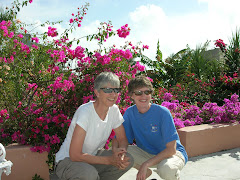
On September 3, 2008, Nancy and I were married in the rotunda of the City Hall of San Francisco. The occasion was thrilling, solemn, and very emotional. After 14 years together, our commitment was suddenly being celebrated by everyone from the county clerk who issued our marriage license and the deputy commissioner who pronounced us "spouses for life," to family and friends who gave cards, gifts, tributes, and hugs. We floated on a wave of happiness for two-months and one day.

Then, on November 4, California voters passed Proposition 8. It restricts marriage to a man and a woman. Same-sex marriages are prohibited. Thankfully, according to CA Attorney General Jerry Brown, the 18,000 couples who wed between June and election day will continue to have a valid marriage. Even this ruling, though, is under siege by right-wing forces.

What this means personally is that, given the patchwork of marriage rights and non-rights across the nation, Nancy is my wife in California and in the states that recognize same-sex marriages: Massachusetts, Connecticut, New York, and Rhode Island. Since I have a wife in those states, I guess that makes Nancy my mistress in the other 45 states, including our home state of Minnesota! You'd think that would be enough to make fundamentalist blood really boil.

In addition to having fun being married AND having an affair, we feel patient and hopeful about what we'd prefer: being legally married wherever we are. Every year the forces of tolerance eclipse the forces of bigotry inch by inch. I look at Obama's victory as a sparkling testament to what is possible. It will take a while longer, but Nancy and I believe that eventually the whole of the United States will support the right of everyone to marry regardless of their mate's gender.

Until then, I will have a wife in California and a mistress in Minnesota. Lucky me!
Becky

Thursday, October 16, 2008

Yes, Readers, We Married

Yes, readers, we married.

September 3, 2008, on the 14th anniversary of Nancy moving into my home, we exchanged marriage vows in the enormous rotunda of San Francisco City Hall. We thank all the Californians who made it possible, including my sister Vicki and her husband Ric, our official witnesses.

Even before saying “I do,” we felt an unexpected, delightful consequence of marriage: people’s happiness for us. From the young San Francisco car rental agent to the middle-aged couple from Ohio behind us on the bus, from waiters to Bay Area friends and family members, people shared in our joy. Of course, we were beaming so much that they may not have been able to help themselves…but still, it was is amazing how such deep affection bubbles up from people when someone gets married.

Another impact is that we are now part of an official social structure. We are in-laws in each other’s families. Our relatives know what to call us when making introductions. Ric coaches Nancy on strategies for coping with the Bohan clan (don’t mention peaches!). The legal binds make for stronger familial ties.

Now that we’re back in Minnesota, a state that does not recognize our marriage, a bit of the glow is off. Yet, when we tell people we recently got married in California, they break into grins and congratulate us. Maybe some of the folks we tell don’t approve of same-sex marriage, but good manners—and perhaps a deep-in-the-bone response to such a basic social institution—win out.

I find that I want to share the news of our nuptials with everyone. Not only are we showered with good wishes, questions about the wedding, and requests to see our rings. Coming-out-as-married also helps raise consciousness. We are part of a sea-change, and bit by bit, the power of prejudice is evaporating before our eyes—and before the reality of the hundreds of thousands of same-sex couples getting married every place we’re allowed to -- in California, Massachusetts, Canada, Spain, Belgium, the Netherlands, Norway, and hopefully, soon, even in Minnesota.

In that case, perhaps Nancy and I will do it all over again!

Becky

Friday, August 15, 2008

Stripping on Deadline

Now that I have your attention … I’m talking about stripping woodwork. Twenty-eight years ago I bought a 1925 Spanish bungalow in south Minneapolis. The combination living room/dining room has wonderful woodwork, but some previous owner applied a muddy, greenish finish that was so thick the grain was barely visible.

In 2005 I began to refinish this woodwork. I started with two radiator covers (pictured left) and beautiful red oak emerged. The results were exciting, but stripping, sanding, staining, and applying polyurethane is hard and tedious work, and I realized this would be a multi-year project. After taking 2006 off to finish writing our book, last summer I tackled the two ceiling beams, the fireplace mantel, and the stained glass window.

This summer Nancy & I decided to buy a new chair for the living room, a wedding present to ourselves. For all our years together, our hand-me-downs have served us well, but my dad’s old chair with the broken spring and dangling bottom cloth really needed to be replaced despite my sentimental attachment.

Well, the cascade began.

We found a chair we loved (they’ve gotten big over the years!) and as Nancy & I took turns sitting in it at the store, we thought maybe we should get two because our old swivel rocker would look pretty crummy next to it. From there it was a small leap to buying the matching sofa.

A few days after we ordered the furniture, we realized that the sofa would not fit through our narrow doors. So we called our handyman, who said he could remove two adjoining dining room windows, and bring the sofa in through them.

But what would happen when we needed to replace our 16-year-old carpet? We’d have to take the windows out again to remove the furniture. Might as well get rid of the carpet now and go to bare wood.

We called a neighborhood business, Earl’s Floor Sanding, for an estimate. Earl said that if we intended to refinish more trim, especially the base boards, we should do it before they began working on the floor. No way, I told him. It’s too much work for one summer.

Then I reconsidered. Refinishing creates such a mess. I didn’t want Ready Strip or Spanish Oak stain to drip on our new floor.

So for the last three weeks my helpers Nancy and Bill (Nancy’s brother who lives with us) and I have stripped, sanded, stained, and polyurethaned the living room/dining room baseboards, doorways, window frames, and built-in buffet. We put on two coats of poly before Earl and crew arrived on Monday. Now I’m in the garage refinishing the built-in buffet drawers and the door and window frame strips we pried off.

As the final coat of poly on the floor cures, I am sitting at the computer nursing sore arms, wrists, thumbs, fingers, elbows, back, you name it. But the living room glows with the natural beauty of rich red oak. It’s amazing what can be done under deadline.

Next summer, I’ll tackle the remaining removeables—three heavy doors, four paned buffet doors, and five casement windows. It will be my last summer of refinishing. After all the sawdust, sweat, fumes, and aches, my family will have a rich Northwoods lodge living room that will bring us much pleasure…and an occasional moment of marvel at how we did it all!


Tuesday, June 10, 2008

I Get Marriage

Marriage has always been a bit of a mystery to me. Two people have a ceremony, file some legal papers, celebrate wildly, and move in together. Sometimes they already share a residence. Admittedly, there are benefits that follow—joint tax filing, spousal coverage of health benefits, inheritance, hospital visitation rights, and so forth. In fact, there are some 800 rights ranging from puny to huge that marriage bestows. But none of this seemed relevant to me. I never missed those benefits, don’t enjoy ceremonies or parties, and already live with the love of my life.

But now thanks to last month’s decision by the California Supreme Court, Nancy and I have decided to get married, and suddenly my former indifference has vanished.

Marriage is more than the sum of rights. It is a powerful social and legal recognition and celebration of a relationship. It is an affirmation of my basic worth as a human being. Having California rule that I have the same right to marry the person I love as my sister had to marry the person she loves brings tears to my eyes and joy to my heart.

I imagine an American woman before 1920 thinking how nice it would be to vote. She could talk herself out of its importance, though, supposing that her vote wouldn’t change anything, and besides, she had enough to do without making time to go vote in every election. But once she could legally enter the polling place, she’d realize that voting is so much more than casting a ballot. It means participation in the democratic process and being part of the greater community. It confers the responsibilities of citizenship and, tacitly, those of adulthood. Marriage is similar.

After our decision, I began to think about how our no-frills ceremony would unfold. I will be 56 years old and Nancy 62 when we exchange vows on September 3. We don’t need anyone “giving” us away, a concept that has always grated on me—that passing a woman from her father to her husband as though “the weaker sex” couldn’t stand on their own. But when I imagined my sister giving me away and Nancy’s sister giving her away (not the way it’s going to be, by the way), suddenly the tears came. It meant leaving our families to start a new family.

Well, duh. But what is obvious for young heterosexual couples who will be starting a family is not so clear for same-sex couples, especially those without children. How many times over the past decades have I been asked about my family and I’ll talk about my parents and my sister. That Nancy is my family has not sunk into my bones. Now with marriage vows and the legal sanction of our love, I feel in a way that has never been real that SHE is my family.

I’ve also had to get over downplaying the importance of celebrating our wedding. Although our elation at the legal support of our relationship has been amplified by the many calls and emails congratulating us, when my sister offered to host a reception, we said we didn’t want any sort of party. “It’s a big deal,” she protested shocked we would even consider such a thing. “People want to celebrate with you!”

The whole concept of marriage has been so alien to me, a person who could not participate in it, that I have never really understood it. Now I am beginning to comprehend that on so many levels, it is a big deal. So not only do I get to have a marriage, I am finally starting to GET marriage.

Becky Bohan

Tuesday, May 20, 2008

Twelve Tips for Coffee Lovers


Life is too short and java too expensive to waste time on inferior products. Here are my totally subjective tips for a good cup of coffee, gleaned from my six winters in Costa Rica.

1. Buy the highest quality coffee you can afford.

2. Choose organic shade-grown coffee. Who wants to be sipping herbicides and pesticides with your brew?

3. Buy fair-trade coffee. It feels better slipping down the throat when you know that the small farmers are getting a better shake.

4. Buy hand-picked coffee. In Costa Rica, the fields are handpicked three times, catching each coffee berry at its ruby ripest. Machine-picking (as is done in countries with larger coffee plantations) strips everything from the plant, including red ripe berries, immature green berries, and overripe black berries, plus leaves, stems, and insects.

5. Buy vacuum-packed coffee. Even better, look for a valve lock attached to the bag. These one-way valves prevent outside air from entering the bag but allow gasses emitted by the fresh-roasted beans to escape. According to the experts at Costa Rica’s Cafe Britt, a bag will keep up to a year unopened and six months in the freezer after opening.

6. Choose whole beans, and grind them fresh. Coffee’s freshness depends not on when it was harvested, but rather on when it was roasted and ground. As soon as roasted coffee is exposed to air, the flavor begins to deteriorate.

7. Make sure your coffee maker is clean. Wash it after each use, especially the part that holds the grounds.

8. Use pure water – unless you want chlorine- or other chemically-flavored coffee!

9. To avoid bitterness, let boiling water come to a rest before pouring it over the coffee grounds.

10 . Avoid percolated coffee. The boiling water keeps circulating, degrading the taste with every bursting bubble.

11. Resort to instant coffee only in an emergency. It is made from the lowest grade beans.

12. If you enjoy iced coffee, pour cooled fresh coffee into an ice cube tray and freeze overnight. The next day, place 2 or 3 of these frozen cubes in your coffee. As they melt, your beverage, instead of becoming watery, will retain its full, satisfying flavor.


After a three-hour Costa Rican coffee tour, which included raking beans as they dried in the sun and practicing making espressos and cappuccinos under the strict guidance of the barista, Antonio, I felt almost ready to apply for a part-time job at our neighborhood coffee shop. But my cappuccino makes it clear that I have much to learn about the fine art of coffee. The top cup shows my muddled attempt at decorating the foam. In the bottom cups are Antonio’s graceful and whimsical creations. But all three cappuccinos tasted stupendous!

Tuesday, April 22, 2008

The Sound of Trees Weeping


Last month, during the dry season here in Costa Rica, Nancy was on her stomach on a massage table when she heard a familiar yet slightly odd stir from the garden: a rustling in the trees and what sounded like raindrops plunking on leaves.

“Is it sprinkling?” she asked.

“No, the trees are weeping,” replied our local massage therapist. “They are so thirsty they are asking the rains to come soon.”

Apparently, it worked. The rainy season started early this year. We’ve had some thunder and lightning storms worthy of Thor, himself.

Likewise, the Costa Rican national bird, the clay-colored robin, starts singing a loud wandering tune two weeks before the rains come. The robins were spot on again this year, and now they continue with their melodious call for rain (and for a mate), often starting at 4 a.m.

Before living in Costa Rica, Nancy and I assumed that the rainy season, usually from May through November, meant day after day of rain. Not so. The days usually dawn clear, with temperatures in the 70s. By late morning, it’s in the high 80s, and the sun feels brutal. Then, while we are having lunch on the veranda while the clay-colored robins pour out their song, the temperature suddenly drops, and clouds fill the sky. Soft thunder gradually rolls toward us until great booms shake the earth and the first fat drops splat on our metal roof.

The storms are thrilling, and we are both excited to experience a bit of Costa Rica’s winter or “green season” (as the travel agencies like to call it) before we leave. Bare trees are sprouting leaves, dry brown lawns are turning a lush emerald, and just today the nearby college campus sported a fresh mow job.

One warm afternoon last week, Nancy went out in the downpour to see water streaming through the maze of drainage trenches. She splashed under waterfalls sluicing off the palm trees and down our flooded driveway to the road. Just beyond the entrance to our apartment complex, two-foot-deep drains had already over-flowed, and a river was rushing down the road. A couple hours later, when we went for a walk in shorts and T-shirts, the sun was already drying the driveway.

The trees no longer make their special sound. All the weeping now takes place from the skies . . . . and from our eyes as we prepare to leave tomorrow. Nancy squeezes a last bag of Costa Rican coffee into our suitcase, and we take a final moonlit walk, our skin caressed by the tropics. We will go to bed early, knowing that the clay-colored robins will wake us at 4 a.m., plenty early to walk into the dawn of another spectacular day in Costa Rica.

Becky

Saturday, April 19, 2008

Farewell, Costa Rica

After three months in Costa Rica, Becky and I return to Minnesota next week, leaving friends, the exquisite climate, and incredible beauty and bounty. In Minneapolis, there are no clusters of magenta bougainvillea blooming at our door. Royal palm trees don’t line the driveway. Pyramids of tree-ripened mangos, papayas, and bananas aren’t at our farmers’ markets. Nor does Cub Foods sell large pineapples for a dollar—what I paid this morning at the produce stand down the road. The owner skinned and sliced my golden pineapple with a few deft strokes of her machete.

I’ll also miss the Costa Ricans.

Not only are they amazingly friendly; they are also extraordinarily helpful. Two weeks ago our neighbors, retired community college teachers like me, got hung up on a rough mountain road. Within minutes, two farmers were on the scene with shovels to help Monica and Dick dig out their Nissan Xterra. When that didn’t work, one of the men drove into town, returned with two tow ropes, hitched the big Nissan to his pint-sized Suzuki Samurai, and was able to position the SUV so its wheels could get traction. When Dick tried to pay him, the guy wouldn’t hear of it. When Monica tried to reimburse him for his purchase, the man insisted he needed those ropes anyway.

Becky and I had a similar experience bicycling in the Osa Peninsula near Corcovado National Park, one of the largest remaining tracts of original tropical rain forest in the Americas. When my bike chain slipped, I tried to reset it, but the chain was jammed tight in the crankshaft. We were in the middle of nowhere an hour before sunset. We hadn’t seen a human being for two hours. Just then, some locals drove by, stopped, and analyzed the problem. The driver pulled out a wrench from his trunk and loosened the crankshaft enough to release the chain. Becky and I pedaled back to our hotel in time for a sunset margarita.

That evening, I ran into the same folks crossing a street in town. They greeted me warmly and invited us to join them at their house by the sea. The next morning the Garcias picked me up (Becky preferred to read under our ceiling fan and avoid the midday heat), and off we went for the day. Getting into the vehicle of complete strangers in a foreign country may sound crazy, but not in Costa Rica. I had a great time with the family, eating juicy red “water apples” from the tree in their yard and joining in their laughter at my Spanish pronunciation.

Now, when I see water apples at the farmers’ market, I remember the Garcias and the many other angels who have blessed our time here. Since Becky and I plan to explore other places in the coming winters, we may not return until 2011. We bid a grateful farewell to this tropical paradise, which has blessed us for six winters.

Nancy