Thursday, April 28, 2011

Athen's Metro

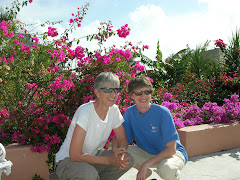
From our picture below, would you assume Nancy and I were in a museum?


Now would you think we were at an archaeological site?


Would you believe we took both photos in a subway station in Athens?

Work on the new metro began in 2000 and was slowed considerably by the nature if the city--Athens is built on the ruins of thousands of years of inhabitants. Every time the workers ran into a pot or bone, the archaeologists were called in to catalogue and clear the site.

Some of the artifacts are now displayed in cases. One amazing wall is made of glass, allowing a view of the strata under the city. Pots from the time of the Ottoman empire are visible, as well as an early Christian grave with the bones in place.

The subway is clean and fast. It has substantially reduced air pollution in Athens. The first day of operation in 2006, it took 100,000 cars off the streets. The Metro takes you to the airport or to the port of Pireaus to catch a ferry to the many Greek islands.

It is amazing what a city can do when it has the political will. I think of the struggle we have had in the Twin Cities trying to get light rail expanded. Mass transportation is the future. If Athens can do it, so can Minnesotans.

Becky

Friday, April 22, 2011

The T-Shirt Mystery

After visiting Kerameikos Cemetary (see previous post), our friends from Italy and we found a shady table at an outdoor taverna. A sturdy waiter brought us crusty bread, light Greek olive oil, grilled souvlaki, crispy calamari, traditional stuffed peppers and tomatoes, roasted eggplant, and a carafe of smooth local white wine.

At the table next to us, a lively group was enjoying a similar meal. A man in his late fifties whose back was to us wore a t-shirt. with the words "I hiked . . . " The rest was hidden. Where had he hiked? We had fun speculating. Finally he leaned forward, and we glimpsed "the trail." Ah. The location must be on the front of the shirt. It became our mission to find out.

Terry volunteered to glance in his direction on her way to the bathroom, but all she could make out was an unfamiliar name word beginning with K. Amy suggested she take a photo of our table from an angle that would include the t-shirt. But as Terry aimed her camera, trying to fit in our table and the man with the T-shirt, one of his dining companions offered to take a picture of our foursome, thinking that was Terry's intention.

Later, I went to their table, greeted them, and said we were curious about his shirt. The man expanded his chest to show the words Mount Kamakou."Is the highest mountain on Molokai," he beamed. Exactly 4920 feet high, I learned later.

"Well, that's impressive," I said. "Where are you all from?"

"From Belgium," the woman who had taken our photo said.

A little while later as we were leaving the restaurant, I saw the Belgian man near the entrance. We talked for a couple of minutes. He and his wife had been on Molokai helping out at the hospital Father Damien founded for lepers. When I was in the convent, studying to become a Maryknoll Missionary, I remembered learning about this missionary priest's extraordinary service to Hawaii's untouchable outcasts.

"Father Damien was from Belgium!" my new friend exclaimed.

"I didn't know that."

"You must see the movie about his life -- Molokai: The Story of Father Damien. He will become saint soon." His clear blue eyes blazed into mine.

My heart overflowed. Obeying an inner prompting, I rested my hand on his cheek. "Thank you for all the good that you do."

He held my gaze, smiling back at me. "I do what I can."

As we women threaded our way down the narrow cobbled streets away from the restaurant, Mary Oliver's question sang through me: "Tell me, what is it you plan to do with your one wild and precious life?"

P.S. Father Damien Day is celebrated throughout Hawaii the same week I met his blue-eyed Belgian champion.

Nancy

Spring in Greece

Spring is a wonderful time to visit Greece. The crowds of tourists and the heat of summer haven't yet arrived. It's cooler than usual this April, so Nancy and I bundle up on our hikes.

Best of all, everything that can be green IS green. The profusion of wildflowers is awesome, and the fragrance of orange blossoms in every neighborhood of Athens is intoxicating.

I can't stop taking pictures of blood-red poppy-like anemone, said to be the blood drops of Aphrodite's slain lover, Adonis.

The fields are white and yellow with daisies, and the meadows full of deep blue lupine.


(Nancy by daisies just below the Acropolis on a sunny day)


The most exciting find was the pink tulips saxatilis, which grows only in high mountain meadows in Crete. This delicate pink tulip is on the cover of my Flowers of Greece booklet, bought one spring 32 years ago when I first fell in love with this ancient country. We were lucky enough to spot at least a hundred of these rare wild tulips in full bloom.

An Ancient Green Cemetery

As Becky and I approach Kerameikos, we know it is different from the other archeological sites we had visited in Greece. It is the land that received many thousands of bodies for over 1500 years, the most important cemetery of ancient Athens. The earliest tombs date from the Early Bronze Age (2700-2000 BCE). Athenians continued burying their dead there until approximately the 6th century CE (Current Era).

On display in a small museum at the entrance are prehistoric grave offerings, tall urns that held ashes of the deceased, and archaic tombstones inscribed with expressions of grief over the loss of loved ones. One ornate chest is labeled ossuary, used where burial space was scarce. A body is buried in a temporary grave, and after some years the skeletal remains are removed and placed in the chest, making it is possible to store the remains of many people in a single tomb.

At the far end of one room stands a graceful life-sized statue of Nemesis, the spirit of divine retribution against those who succumb to hubris (arrogance before the gods). Becky and I marvel again at the powerful Godesses and human females depicted in ancient Greek art as well as the sculptors' skill in chiseling such realistic draped clothing.

The most interesting sign was about the Plague that struck in 430 BCE, killing thousands of Athenians. Physicians had no idea how to treat their patients and died themselves in large numbers. Each morning, the bodies were picked up, often near public fountains where the victims had tried to quench their terrible thirst. In violation of Athenian burial law, the corpses were dumped into a mass grave in Keramikos.

Outside the museum, sun-drenched and tree-shaded paths wind through ancient gavesites and the foundations of buildings and walls. (The Acropolis with its magnificent temple to Athena, is visible in the background.) Although we don't see any families lounging on the grass, my mother would have recognized this as a "fine and private place" for a picnic. Proponents of natural cemeteries can applaud Athens for maintaining this prime real estate as a public green space. Of course, Kerameikos was also green in the environmental sense: no embalming fluids, metal caskets, or concrete burial vaults went into the earth here. The cemetery, however, was full of marble tombstones, which contemporary green burial grounds do not include.

Once again, I'm reminded of "time's winged chariot hurrying near." Whether we succumb to hubris or live humbly, remorseless Nemisis pushes us toward the grave. May we drink deeply from the fountain and love our dear ones while we can.

Nancy

Wednesday, April 6, 2011

Are You Ladies All Alone!?!


When we pulled up to the US/Mexico border crossing at noon last February 13th, an agent leaned down to our window. “Where are you driving from?” he asked.

“Cancun.”

His jaw dropped. “Cancun?! All by yourselves?!”

Translation: “Without a man along?!”

That response was repeated by the custom officials. Guess they don’t see too many middle-aged ladies driving through Mexico together.

And that, frankly, was a good reason for making the journey of 7,200 miles. It proved to ourselves ,to the people we met along the way, and to those who have heard about our road trip that we can do it.

Another surprising part of this border crossing was that we could bring fresh produce into the United States. We had a few leftover limes, avocados, oranges, bananas, and nuts that we expected to hand over. The only item the customs officials confiscated was an apple that probably had been imported to Mexico from Washington State. Maybe winter when we fly to Cancun, we’ll see if we can bring back a some delicious Mexican limones, avocados, and mangoes. And the next time we drive to Cancun All By Ourselves, maybe we’ll bring in a couple of 25-pound sacks of oranges that vendors were selling along the road by the fruit orchards in Veracruz.

Becky

Tuesday, April 5, 2011

Driving in Mexico: Pluses

Why did we enjoy our road trip in Mexico? First there’s the joy of beautiful and surprising sights, for example mile after mile of trees laden with oranges along the Gulf, thundering waterfalls and pine-forested mountains of Chiapas, a breathtaking flock of flamingos in the Yucatan, and the eighth most visited aquarium in the world in Veracruz. (See our February 4, 2011 posting)

Second, delicious and inexpensive regional specialties made from fresh ingredients, like the artistic mango-on-a-stick pictured in our February 10, 2011 posting. One noon we pulled into an open-air restaurant far from any town, right on the Gulf of Mexico. Within minutes, we were enjoying fresh red snapper, savory beans and rice, a stack of hot tortillas, several piquant sauces, and a cold beer, all for under $10.

Third, friendly, helpful people. Everyone was helpful and patient with my Spanish as I bought a cell phone, had my teeth cleaned, applied for a senior citizen card, and took violin lessons. Having a car meant Becky and I got to meet skillful, creative mechanics who went out of their way to solve the water leaks that plagued our rusty old Buick. My new friend on Isla Mujeres, Adolfo, welded patches over the rust holes and then escorted me to the hard-to-find local lavacar, where we had a satisfying discussion of 12-step recovery, parenting, and homosexuality while the car was being washed.

Fourth, a sense of competence in dealing with conditions that don’t exist at home. Being in a foreign country, much less driving long distances in one, stretches a person. It is fun and satisfying to accomplish something that seems difficult and scary.

Fifth, day after day of compatible togetherness. Becky and I love road trips, and this one was especially sweet…probably because it was so adventurous. We worked well as a team. When one person was tired, the other seemed alert. We found ourselves talking through situations effectively, such as locating lodging or trying to figure out the procedure at the border. We loved listening to music and to books on tape. We read a novel out loud to each other—Water for Elephants. The long drives went by amazingly quickly.

People often asked us if we weren’t afraid of all the violence. We didn’t have any trouble and never felt in danger. The main threat we saw up close is to the economy of Isla Mujeres. Restaurants and hotel, including our Nautibeach Condos, were half empty because of people’s fears of Mexico. But Mexico is a huge country, and the Yucatan has a murder rate roughly equal to that of France.*

I’m grateful for the whole experience. Even so, next winter Becky and I will take a direct flight to Cancun. We’ll be breathing in that tropical air and gazing at the turquoise Caribbean waters about 3 hours after leaving Minneapolis!

*Minneapolis Star Tribune, Nov. 30, 2010, D8.

Driving in Mexico: Challenges

Although we didn’t have any serious problems driving 7,200 miles from Minneapolis to Cancun and back, Becky and I did encounter a few challenges.

The most consistent problem was the inconsistent quality of the roads. After hours of single-lane pot-holed roads, we might find ourselves on a modern 4-lane divided highway cruising along at 100 kilometers per hour. Finally, we’d smile, we’re making good time. And look– we’re only 1100 kilometers from Cancun!

Within twenty minutes, however, we’d usually run into one or more challenges:

1. Lane reduction. The divided highway suddenly narrows to a 2-lane blacktop road with no shoulder but deep, craggy potholes.

2. A village. We brake for ten to twenty topes. We creep over the high speed bumps, holding our breath as the muffler and exhaust pipe scrape against the cement.

3. Road construction. A guy in jeans and t-shirt vigorously waves a little flag. Cars, trucks, and buses creep through the next mile or so of dirt and rocks.

4. A military checkpoint. We wait in line for a few minutes or maybe an hour. Armed soldiers in combat fatigues approach the car. They examine our drivers’ licenses and passports, ask where we’ve been and where we’re going, and sometimes look through our trunk. Although these soldiers are unfailingly courteous, the barricades, machine guns, uniforms, and semi-automatic rifles are intimidating. We’re relieved when they let us proceed.

5. A local cop. In one village, the policeman who pulled us over said we were speeding, a serious infraction. In a larger town, the officer second said we had run a red light, a very serious infraction. The fine for each of these was well over $200. If we didn’t have time to go to the police station, he would allow us to pay on the spot. After negotiating a lower amount, we paid on the spot.

Eventually, we got used to challenges 1-4. Armed with tips from a friend who has often driven in Mexico, we even managed to avoid being pulled over again. But we never adapted to the inadequate signage. One morning, for example, the modern 4-lane highway we were cruising on forked without warning. Both branches looked like main arteries. The sign over the left road said 180D. The sign over the right road also said 180D. Quick! Choose! I went right. Within a mile, the highway petered out and we came to a tiny pueblo. More topes! Guess we should have gone left.

Even more challenging was entering a town with no signs pointing a route through the crowded, narrow streets to the highway on the other side. If it weren’t for our GPS, I wonder how we would have gotten through several large cities. But sometimes the GPS was wrong, and then we navigated by instinct, luck, and the kindness of the locals.

So would we drive to Cancun again? Absolutely!

What, are you two crazy?

That answer must wait for another day.

Nancy